
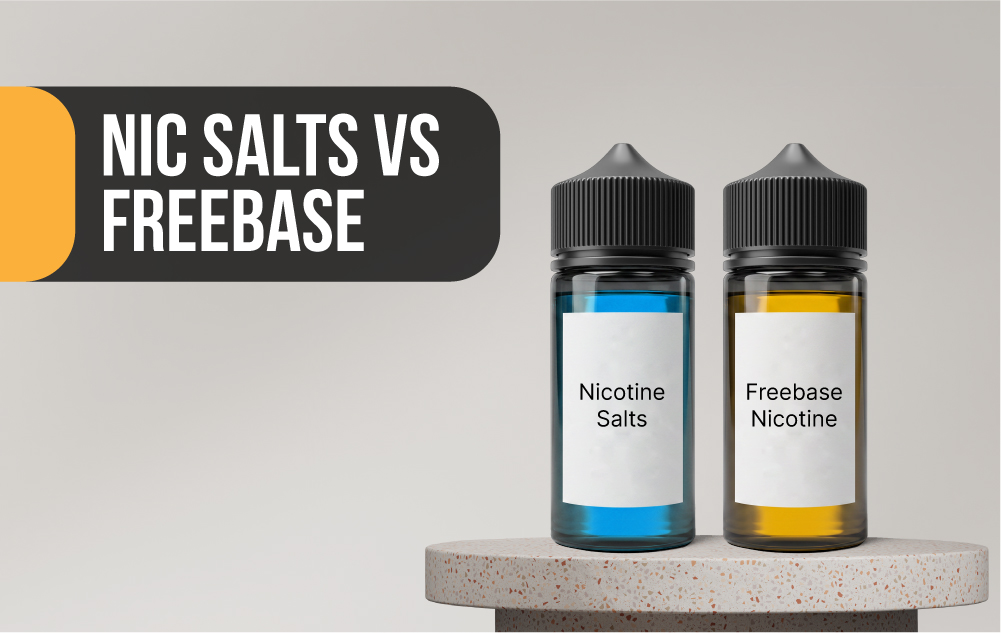
UK e-liquid falls into two nicotine categories: nic salts and freebase. Both use the same nicotine, but a different chemical process changes how each one behaves once it's in the bottle and in your system. That process affects throat hit, how fast the nicotine reaches your bloodstream, and which devices each type is built for.
The breakdown below covers both types and where each one fits.
What Are Nic Salts?
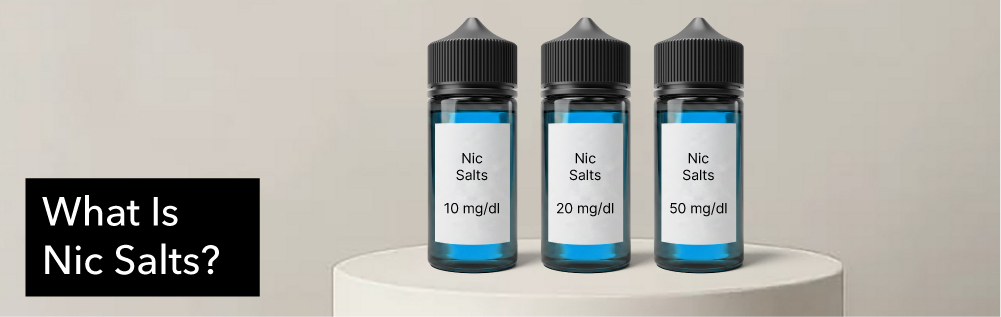
Nic salts are e-liquids made with nicotine bonded to an acid, usually benzoic acid. This bonded state mirrors how nicotine exists naturally in the tobacco leaf, and the lower pH gives the liquid a milder, less peppery taste on inhale than nicotine in its refined state.

What Is Freebase Nicotine?
Freebase nicotine is the standard, non-acid form of nicotine used in e-liquids, made by stripping nicotine from its natural salt state to raise its pH. This refined form has been the standard base in e-liquids since vaping began, and it's what most vapers relate to as "pure" nicotine.
Nic Salts vs Freebase Nicotine: The Key Differences
|
Nic Salts |
Freebase Nicotine |
|
|
Form |
Nicotine bonded to an acid |
Pure, unbound nicotine |
|
Absorption |
Fast, closer to a cigarette |
Slower, builds across the draw |
|
Throat Hit |
Smooth, even at high strengths |
Sharper, more traditional hit |
|
E-Liquid Ratio |
50/50 VG/PG |
70/30 VG/PG or higher VG |
|
Compatible Device |
Pod kits, mouth-to-lung |
Sub-ohm tanks, high-power mods |
Nicotine base changes more than the number printed on the bottle. It changes how a vape actually behaves once it reaches the system, from the moment it's inhaled to the equipment it's poured into. The following end up shaping that experience most:
Speed and Throat feel
Acid-bonded nic salt juice brings its pH closer to neutral, which lets it cross into the bloodstream with far less resistance. That's why the effect lands within seconds rather than building slowly, closer to how nicotine behaves in cigarette smoke.
Freebase nicotine sits at a higher, more alkaline pH, so it takes longer to filter through lung tissue before the effect registers. That slower path also produces the sharper catch felt at the back of the throat once strength climbs, since more raw nicotine irritates the airway before it's absorbed.
Formulation and Device Fit
Viscosity decides how a liquid behaves inside a coil, and it's the real reason nic salts and freebase liquids end up in different devices. Nic salts use a thinner, more PG-heavy mix that wicks efficiently through the tight coils used in pod systems, which don't generate enough heat to vaporise anything thicker.
Freebase liquids lean higher in VG, and that thicker mix needs the extra heat sub-ohm tanks and high-power mods produce. Pour a high-VG freebase liquid into a low-power pod instead, and the coil struggles to wick fast enough, leading to a dry, burnt hit rather than a clean draw.
Choosing Your Strength
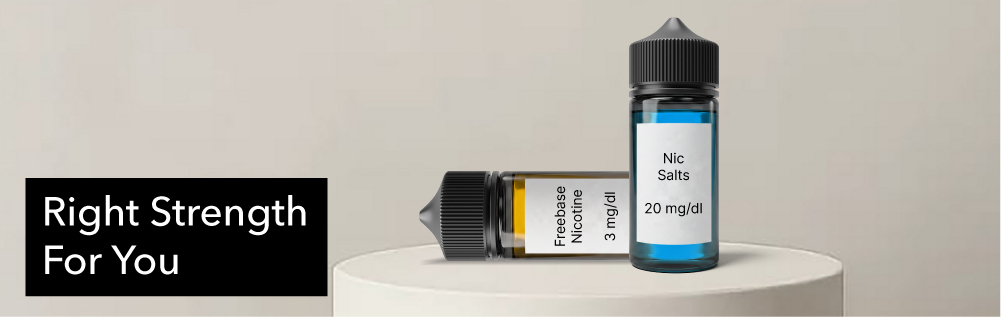
Strength is capped by law before it's ever a matter of preference. Under the Tobacco and Related Products Regulations 2016, no nicotine-containing e-liquid sold in the UK can exceed 20mg/ml, and any bottle containing nicotine is limited to 10ml.
Within that limit, strength still needs to match smoking history. A 20mg nic salt suits someone coming straight off 20 or more cigarettes a day, where the nicotine hit needs to land fast enough to stop a craving before it builds. Someone smoking under ten a day, or already a few months into vaping, often finds 10mg or lower covers the same craving without the sharper edge that higher strengths bring on a longer session.
But there's a middle ground too. Plenty of vapers keep a nic salt pod kit for on-the-go convenience and a freebase mod for relaxed sessions. Nothing says you have to pick one system for good.
Switching Between Nic Salts And Freebase
Moving from a nic salt pod kit to a freebase sub-ohm setup, or the other way around, isn't just pouring a different bottle into the same tank. A freebase liquid in a pod coil built for nic salts tends to flood the wick and taste burnt, since the coil can't handle the thicker VG ratio at low wattage. A nic salt in a sub-ohm tank vaporises too fast at high wattage, wasting liquid and potentially delivering more nicotine per draw than intended.
You usually need to adjust the strength alongside the switch. Someone moving from a 20mg nic salt to freebase should expect to start lower in a sub-ohm setup, since the increased vapour volume and draw size deliver more nicotine per puff than a tight, low-power pod ever would.
Finding Your Fit
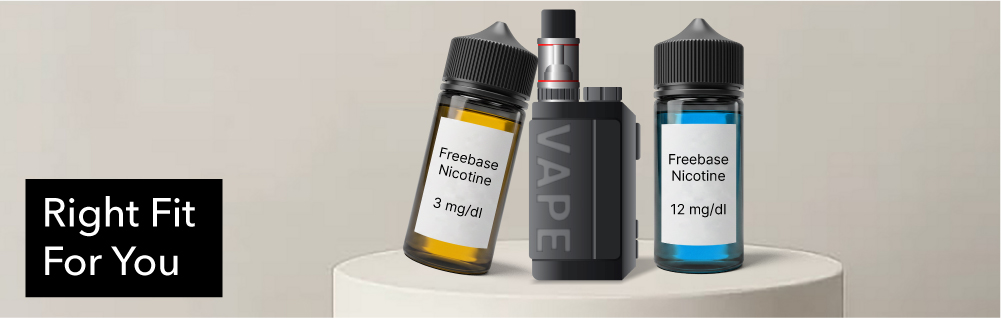
A nic salt and a freebase liquid can sit on the same shelf and serve two very different vapers. The device you use and the strength your body still asks for settle the choice long before flavour or price matters. Match the base to those two things first, and the rest of the decision gets a great deal easier.
But still, treat the base as adjustable, not fixed. What works now may not work next, and switching between nic salts and freebase costs nothing more than a new bottle.