
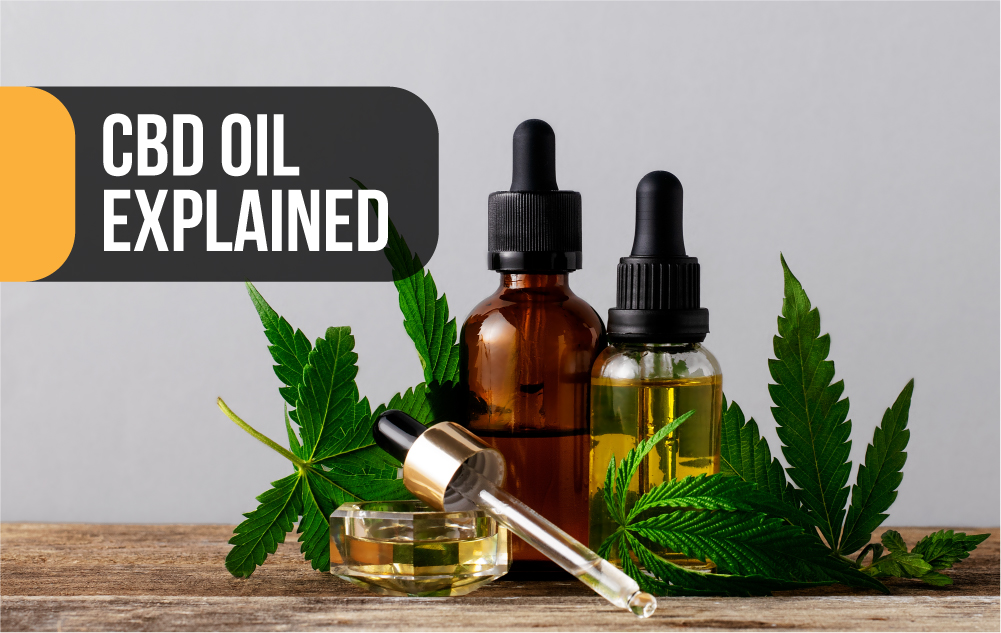
CBD oil has settled into a steady spot on the UK wellness shelf, sitting beside vitamins and supplements in health shops and online stores across the country, and more people pick up a bottle each year, drawn by its link to calmer evenings, better sleep and eased aches without the high associated with cannabis.
Yet despite CBD oil UK sales climbing year on year, many buyers still feel lost the moment they read the label, since strength, extraction method, legality questions and dosing advice rarely line up between brands, leaving new users unsure where to start.
And getting past that confusion starts with knowing exactly what's in the bottle, what it can realistically do for you, and whether the law backs up the way you plan to use it.

What Is CBD Oil?
CBD oil is a liquid extract made by infusing cannabidiol into a carrier oil such as MCT or hemp seed oil, and each CBD oil cannabidiol percentage shown on the label tells you how much active compound is present per drop, making it the single most useful figure when comparing products.
Full-spectrum CBD oil keeps the plant's other cannabinoids and terpenes intact, working alongside CBD in what's known as the entourage effect. Broad-spectrum versions strip out THC entirely, and isolate drops contain CBD alone with nothing else from the plant. Whichever option you choose, look for a brand that publishes lab results and uses CBD hemp oil sourced from EU-approved hemp strains, since quality varies a fair amount across the market.

What is CBD Oil Good For?
Understanding what CBD oil is used for starts with knowing where the benefits of CBD oil tend to show up most consistently, and the research behind cannabidiol has grown alongside that interest. But before exploring the list below, it helps to know that everyone responds differently, and what works for a friend or family member won't necessarily work the same way for you.
Here's where CBD oil benefits show up most often in everyday use:
CBD Oil for Anxiety and Stress
Your body runs an endocannabinoid system, a network of receptors tied to mood and stress regulation, and CBD interacts with that system directly. That's the reason so many people reach for a few drops before something that puts them on edge, and describe a sense of calm settling in within the hour.
Unlike a sedative, CBD doesn't dull you down to get there; users typically describe staying alert while the edge comes off, which is part of why it's become a habit rather than a one-off fix for many.
CBD Oil for Sleep
Lying awake, running through tomorrow's to-do list is the exact problem CBD oil for sleep is used for. The same receptor network involved in mood also plays a part in regulating your body's sleep-wake rhythm, so cannabidiol taken in the evening works on a system already responsible for winding you down.
Timing makes a real difference here. Most people take it 30 to 60 minutes before bed rather than right as they're climbing under the covers, giving the body a window to settle before sleep is actually expected to happen.
CBD Oil for Pain Relief
CBD oil for pain relief is used for a wider range of everyday aches than people often expect, and two patterns come up most. CBD oil for arthritis users typically cite ongoing joint stiffness and inflammation that fluctuates day to day, while CBD oil for back pain tends to come from a more mechanical source, hours at a desk, manual labour, or muscle tension that builds without an obvious trigger.
CBD doesn't act as a painkiller in the way paracetamol or ibuprofen does. Instead, it interacts with receptors involved in how your body processes pain signals in the first place, which is why some users notice a gradual change in how discomfort feels rather than an immediate dulling of it.
Note: This is not an exhaustive list and should not be considered medical advice. Be sure to always consult with a medical professional before using CBD oil alongside any existing condition or treatment plan.

How to Take CBD Oil
Knowing how to use CBD oil changes how quickly it acts and how long the effects last, so picking the right method matters as much as picking the right product. Here are the main ways people use CBD oil:
Sublingual Drops
Placing oil under your tongue puts CBD directly against the thin, capillary-rich tissue lining your mouth, which is what makes this route faster than swallowing oil outright. The capillaries sit close to the surface, so cannabidiol absorbs directly into your bloodstream instead of passing through your stomach and liver first, where a portion would otherwise break down before reaching the rest of your body.
The benefits of CBD oil under the tongue go beyond speed, though. Because less CBD is lost to digestion, you tend to feel more from a given dose than you would if you were taking the same amount in food or drink.
To do this properly, use the dropper to place your measured amount under your tongue and hold it there for 60 to 90 seconds before swallowing. During that window, don't talk or drink anything, since both reduce how much time CBD has to absorb through the tissue.
CBD Oil Capsules
CBD capsules take the slower route on purpose. Once swallowed, a capsule travels through your stomach and gets processed by your digestive system before CBD reaches your bloodstream, which is why effects from capsules build more gradually than drops placed under the tongue. What you lose in speed, you gain in a fixed, pre-measured dose with no taste and no need to hold anything in your mouth.
Take your capsule with food, ideally something containing a bit of fat, since CBD is fat-soluble and absorbs better alongside a meal than on an empty stomach. Stick to the same time each day if you can. Consistency matters more with capsules than with any other method, given that CBD oil dosage is locked in from the start.
The CBD oil capsules UK market has grown enough that you'll find options spanning broad-spectrum, full-spectrum, and isolate formulations, all in pre-measured doses, so there's room to match the capsule type to whatever spectrum you've already decided suits you.
CBD Oil Vapes
Vaping delivers CBD into your lungs rather than your digestive system, and your lungs offer a huge surface area packed with blood vessels, right against thin tissue. That combination lets cannabidiol cross into your bloodstream within minutes, which is why vaping is one of the fastest-acting methods available.
Proper use here means reaching for CBD e-liquid made specifically for vaping, not regular CBD oil, since oil-based drops aren't designed to vaporise safely in a device and can damage your coil. Inhale slowly and hold the vapour in your lungs for a couple of seconds before exhaling, much like you would with any e-liquid, to give your lungs time to absorb what's there.
Added to Food or Drink
Mixing CBD oil into food or drink routes it through your digestive system alongside whatever you've eaten, and that's both the appeal and the trade-off. The earthy taste of hemp gets masked by whatever you've mixed it into, but digestion adds time before you feel anything, often an hour or more.
If you choose this method, stir your oil into something containing natural fats, such as yoghurt, a smoothie, or a meal with a bit of olive oil, since fat helps your body absorb cannabidiol more efficiently. Avoid adding oil to anything cooking on high heat, as excess heat degrades CBD and weakens what you're left with. Stir it into a dish once it's off the heat, or add it to a warm or cold drink, to keep the compound intact.
Is CBD Oil Legal in the UK?
CBD oil is legal in the UK provided it's derived from an approved industrial hemp strain with no more than 1mg of THC per container, as set out under the Misuse of Drugs Regulations 2001. The Food Standards Agency also requires CBD products sold as food to carry novel food authorisation, so checking a brand's compliance status before buying protects you from unregulated products.
Still, CBD oil legality by country varies considerably outside the UK; some EU states permit it freely, while others restrict THC limits more tightly or ban CBD products entirely, so it's worth checking local rules before travelling with any.

Does CBD Oil Work: Effects and Side Effects
CBD oil effects vary between people, and the honest answer is that results depend on the person, the dose, and the reason they're taking it. How long does CBD oil take to work? It is influenced by the method you've chosen, since sublingual users often notice a difference within 20 to 30 minutes, while those taking capsules or mixing oil into food usually wait an hour or more. Fat content in a meal can also affect how much cannabidiol your body absorbs and how fast.
As for reported CBD oil side effects, they are generally mild, and most trace back to how cannabidiol interacts with the body's endocannabinoid system rather than any harmful compound in the oil itself. Dry mouth is the most common, and it happens because CBD receptors sit in the salivary glands, so cannabidiol can reduce saliva production temporarily. Drowsiness tends to follow higher doses, since CBD's calming effect on the nervous system can tip into tiredness when more of it is circulating than the body is used to. Changes in appetite, either a dip or an increase, come from CBD's interaction with the receptors in the gut and brain that regulate hunger signals, and those shifts usually level out as the body adjusts to a consistent dose.
None of these affects everyone, but starting low and building up gradually gives you a clearer read on how your body responds before committing to a higher amount. And for pet owners researching CBD oil for dogs or CBD oil for pets, dosing differs enough by animal size and species that it's worth treating it as a separate decision entirely rather than scaling down a human dose.

Bringing CBD Oil Into Your Routine
Picking a CBD oil that suits your goals comes down to checking the spectrum, confirming the THC content sits within legal limits, and choosing a method that fits how you already live. Whether that's a few drops under the tongue before bed or capsules tucked into a morning routine, consistency tends to matter more than the exact format you choose.
Browse Vapoholic's full CBD range when you're ready to compare options, narrowing down what's right for you.